

News • Defence • Analysis
The sun sets on India’s iconic and controversial Soviet fighter jet
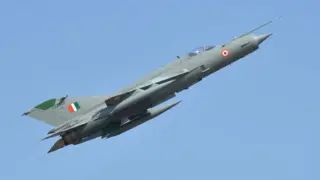
After more than six decades in service, the Indian Air Force has formally retired the legendary MiG-21 — a supersonic workhorse that helped build India’s aerial capability but later drew criticism for a poor safety record. This is the end of an era for one of the most recognisable jets in Indian skies.
Final curtain: when and where
The Indian Air Force (IAF) marked the ceremonial decommissioning of its last MiG-21 squadrons with flypasts and a formal send-off at Chandigarh — the base where the type was first inducted. The retirement ceremonies in late September 2025 closed a chapter that began when the jet entered Indian service in the 1960s. 1
A fast introduction and long service life
First introduced to India’s fleet more than 60 years ago, the MiG-21 became the country’s first operational supersonic fighter and served across multiple generations and conflicts, from the 1960s wars to later engagements. Over its more than six-decade run the aircraft was repeatedly upgraded to keep it combat-relevant even as air-war technology advanced. 2
Why the MiG-21 is both iconic and controversial
For many Indians the MiG-21 is synonymous with valor: it was cheap, fast and ubiquitous at a time when the IAF was expanding. But the jet also acquired a darker reputation in later decades because of a high accident rate and a string of deadly crashes. That safety record led to critical public debate and the aircraft being labelled — unfairly or not — with harsh nicknames in some headlines. 3
Operational legacy: where it mattered most
Despite controversy, the MiG-21 played key roles in several major operations and conflicts and formed the backbone of India’s fighter force for decades. Its small size, high speed and relative simplicity made it effective for point-defence and interception missions, particularly in an era before modern fourth-generation fighters became widespread. 4
Farewell rituals and public memory
The final ceremonies combined solemnity with celebration: squadron flypasts, formal salutes and veterans sharing memories of missions and camaraderie. Museums and aviation heritage groups are already preparing to preserve examples of the MiG-21 so future generations can study and remember its complex legacy. 5
What comes next for the IAF?
The MiG-21’s retirement is part of a wider modernisation drive that prioritises indigenous platforms and newer multirole fighters. The light combat aircraft (LCA) Tejas — built in India — and other modern types are slated to replace aging Soviet-era jets and to deliver improved safety, sensors, weapons and sustainment. The shift reflects both strategic ambition and lessons learned from decades of operating legacy fleets. 6
Why this matters beyond military hardware
Beyond defence budgets and squadron lineups, the MiG-21’s exit is symbolic: it marks a transition in India’s aerospace story — from a nation that relied heavily on foreign designs to one that seeks to develop more of its own capability. How well the IAF manages this transition — balancing capability, cost and pilot safety — will shape India’s air power for decades to come. 7