

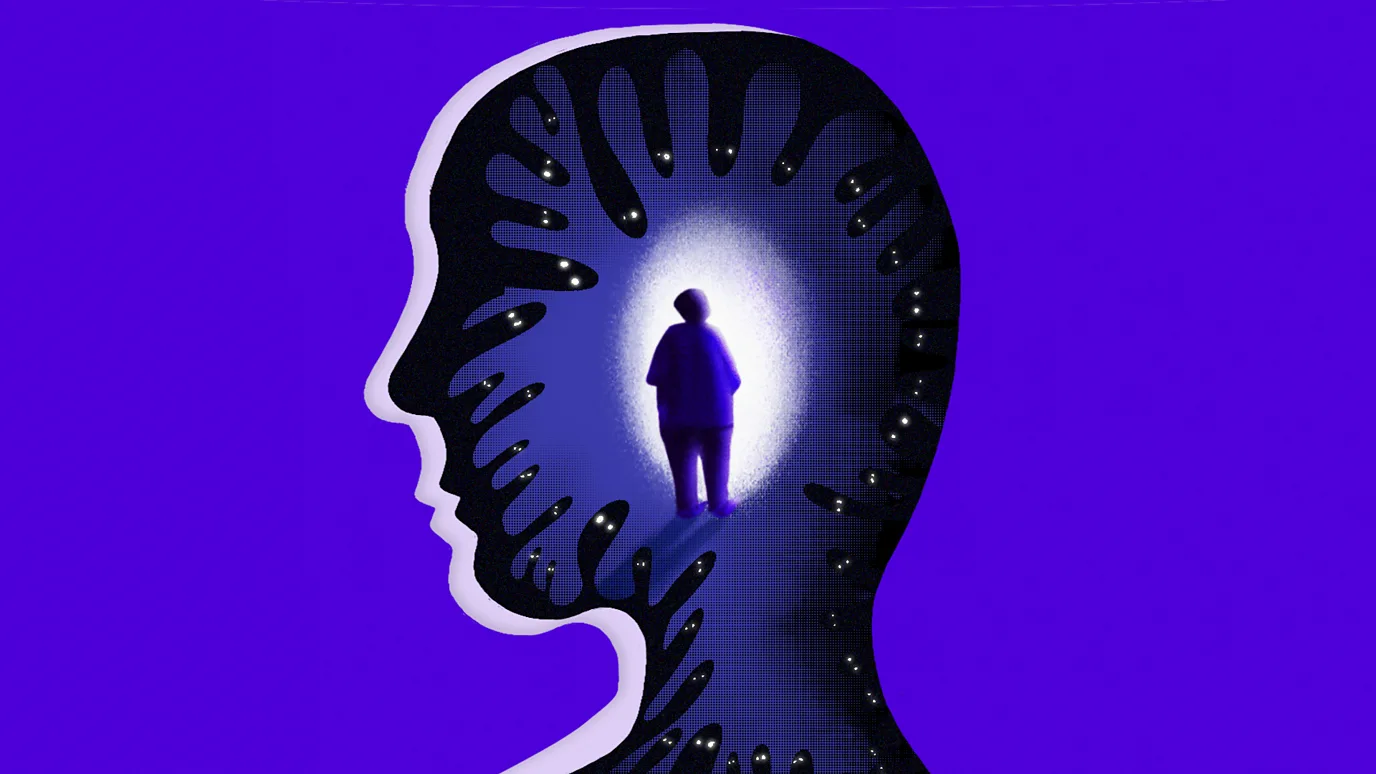
The Rare Disease That Stops Us Feeling Fear: When a Survival Instinct Fails
Feeling fear is an evolutionary superpower, a built-in alarm system designed to keep us safe. But what happens when that system is completely switched off? For a small number of people, this isn’t a hypothetical question, but a daily reality. Welcome to the world of Urbach-Wiethe disease.
This response is what causes our heart to race, our palms to sweat, and our senses to become hyper-alert. It’s a primal, lightning-fast reaction that has helped our ancestors survive for millennia. It’s not a choice; it’s a hardwired survival tactic.
Urbach-Wiethe Disease: The Fear-Free Condition
Urbach-Wiethe disease, also known as lipoid proteinosis, is a rare genetic disorder that affects various parts of the body, including the skin and voice box. But its most profound and studied symptom is its impact on the brain. In many cases, the disease causes calcification, or hardening, of the amygdala. This damage effectively short-circuits the brain’s fear response.
One of the most well-documented cases is a woman known in scientific literature as “SM-046.” For decades, researchers have studied her unique condition, and the findings are astonishing. SM-046 has been exposed to everything from venomous snakes and spiders to frightening horror movies and even violent physical threats, and she reports feeling absolutely no fear. She understands that these situations are dangerous intellectually, but the visceral, emotional response is completely absent.
How Do They Survive Without Fear?
The immediate question that comes to mind is: if you can’t feel fear, how do you stay safe? The answer lies in a combination of conscious reasoning and learned behavior. While the instinctual alarm system is broken, the cognitive part of the brain is still fully functional. Individuals with this condition must rely on intellect rather than emotion to make safety decisions.
- Conscious Danger Assessment: They learn to recognize threats based on memory and knowledge. For instance, they know a car coming at them is dangerous because they’ve been taught that it is, not because they feel a sense of dread.
- Relying on Others’ Reactions: Observing the fearful reactions of others can be a crucial cue. If someone else is panicking, it signals a potential threat that the person with Urbach-Wiethe disease might not otherwise recognize.
- Developing Habits: They must consciously develop habits and routines to mitigate risk, such as always looking both ways before crossing the street, even when they feel no internal compulsion to do so.
This process highlights a fascinating duality: the disconnect between the brain’s emotional and rational systems. While we typically rely on both for survival, these individuals demonstrate that it is possible, though incredibly challenging, to navigate the world with intellect alone.
A Deeper Look at Human Emotion
The study of Urbach-Wiethe disease is not just about a rare medical condition; it offers profound insights into the nature of human emotion itself. It suggests that fear is not just a concept, but a tangible, physical sensation rooted in a specific part of the brain. The existence of individuals who lack this sensation helps neuroscientists and psychologists better understand how our brains are wired and what makes us human.
In a world where fear can be a debilitating force for many, the story of those who cannot feel it is a powerful reminder of how complex our minds are. It shows us that survival isn’t just about instincts, but also about the incredible capacity of the human brain to adapt and overcome even the most fundamental of biological limitations.