
“We should use some of these dangerous cities as training grounds for our military,” Trump tells generals — Explained
What exactly did the president say?
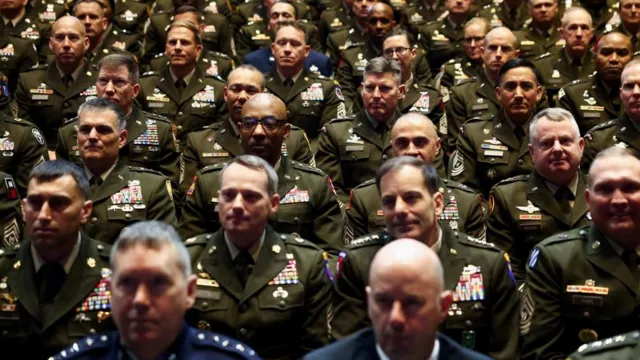
Speaking to hundreds of generals and admirals, the president said, “I told Pete, we should use some of these dangerous cities as training grounds for our military, National Guard, but military,” and named several large cities he characterized as unsafe. He also described fighting a “war from within.” 1
Why this matters: legal and civil-military concerns
Using active-duty military forces for law enforcement inside U.S. cities is tightly constrained by law and large-scale domestic deployments would raise immediate legal and constitutional questions. Experts and military commentators say proposals to treat American. Cities as practice battlefields risk eroding civil-military norms and could face court challenges. 3
How military and political leaders have reacted
Reaction has been mixed and often sharply critical. Some local and state officials pushed back, warning that treating cities as training grounds would intimidate residents and damage trust between communities and institutions. Senior military leaders in the room reportedly showed restrained public reaction, underscoring the sensitive nature of the remarks at a gathering of uniformed officers. 4
Practical and policy implications
- Operational limits: Deploying troops for extended domestic law enforcement would require legal authorizations and likely congressional or judicial review. 5
- Military readiness vs. civil trust: Using cities as training environments could produce short-term tactical experience but at the cost of civil-military trust and potential harm to civilians.
- Domestic politics: The proposal plays directly into broader debates about public safety, federalism, and the role of the federal government versus local authorities.
Key quotes & context
— President Trump, Sept. 30, 2025: “We should use some of these dangerous cities as training grounds for our military…” 6
— Coverage notes: The speech occurred at Marine Corps Base Quantico and was organized around a broader theme of reorienting the military’s priorities toward “homeland defense,” a shift that commentators say risks politicizing the force. 7
What could happen next?
Short-term: expect legal review, statements from state governors and mayors, and likely congressional scrutiny. Mid-term: any actual deployments beyond authorized National Guard actions would face litigation and administrative hurdles. Long-term: the episode may deepen debates over civil liberties, oversight of the armed forces, and where domestic public-safety responsibilities should sit. 8
Sources & further reading
Reporting summarized here comes from contemporaneous coverage of the speech and immediate reactions:
- Reuters — report of the Quantico speech and the “training grounds” quote. 9
- The Washington Post — coverage and analysis of the address to military leaders. 10
- Military Times — reporting on the president’s remarks and implications for troop use. 11
- The Guardian — analysis of the speech, Defense Secretary Pete Hegseth’s role, and reactions. 12
- Local coverage — reactions from state and city leaders (example: WCVB reporting). 13