

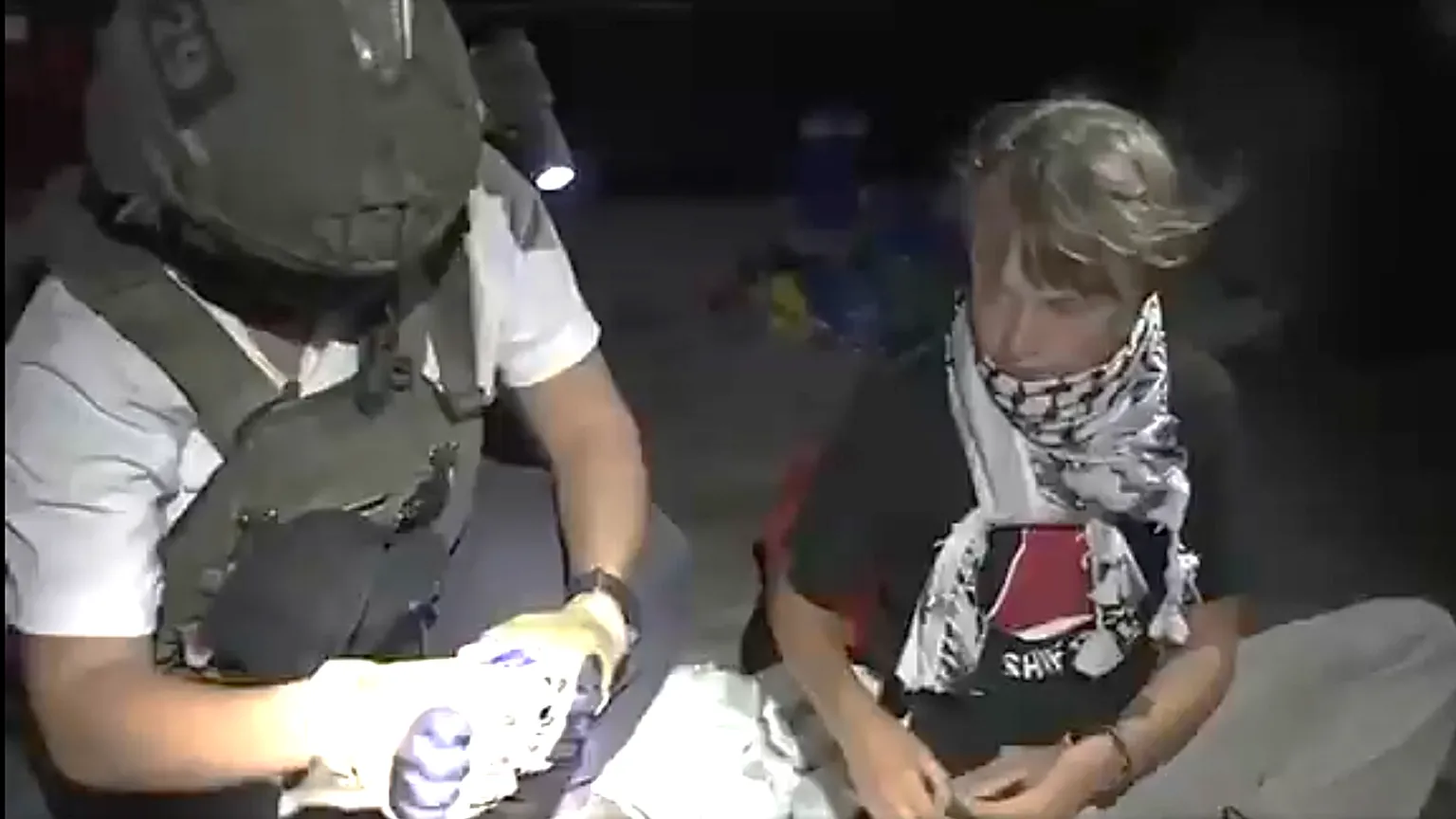
Israeli navy intercepts Gaza-bound Global Sumud flotilla — Greta Thunberg among activists taken to port
What happened
Late on Oct. 1, 2025, organizers of the Global Sumud flotilla reported that Israeli naval vessels had intercepted several of the convoy’s boats as they neared Gaza. Organizers said the flotilla comprised roughly 40–50 civilian boats carrying about 500 people — parliamentarians, lawyers, activists and humanitarian workers — travelling to deliver symbolic supplies and to protest the long-running blockade of Gaza. 1
Israel said its forces stopped and diverted a number of the vessels and that passengers. They were being safely transferred to an Israeli port. A video released by Israel’s foreign ministry showed Greta Thunberg surrounded by soldiers and stated she and others were “safe and healthy.” Organizers and some witnesses said the interception occurred well beyond Israel’s territorial limit and accused Israeli forces of disabling communications and using water cannons. 2
Who is on board
Besides Greta Thunberg, the flotilla included activists, lawmakers and public figures from multiple countries. Organizers described the mission as largely symbolic — carrying small amounts of medicine and food — intended to challenge the naval blockade and draw attention to Gaza’s humanitarian crisis. 3
International reaction and fallout
The interception immediately drew widespread diplomatic and public responses. Several governments and civil society groups condemned Israel’s action, while Israel defended it as enforcement of a lawful blockade and cited security concerns about approaching an active combat zone. Some countries registered formal protests; others announced measures such as diplomatic démarches. The incident has already spurred protests and calls for investigations by rights groups and some national leaders. 4
Legal and practical questions
The episode raises complex legal questions. Under the United Nations Convention on the Law of the Sea (UNCLOS), a state’s enforcement rights are generally strongest within territorial waters (12 nautical miles), but blockades and wartime measures can complicate that framework. Independent legal analysts and international observers will likely scrutinize where the boats were stopped and whether proper maritime protocols were observed. 6
What to watch next
- Official statements and lists of detained or deported passengers from Israeli authorities. 7
- Responses from countries whose citizens were on board and any diplomatic steps they take. 8
- Investigations or reports by independent maritime or human rights organizations into the conduct of the interception. 9
- The flotilla organizers’ next moves — whether remaining vessels press on, reroute, or suspend the mission. 10
Context: why the flotilla matters
Flotillas have historically been used as high-profile actions to challenge blockades and attract international attention. In the current context — following prolonged conflict and a humanitarian emergency in Gaza — the Global Sumud flotilla sought to both deliver symbolic aid and highlight conditions in the enclave. Whether one views it as civil disobedience or a security risk depends largely on political and legal perspective, which explains the polarised international response. 11
Voices on the scene
Media outlets published footage and statements from both the flotilla’s organizers and Israeli authorities. Activists described attempts to livestream the interception and alleged jamming of communications; Israel said it warned the vessels and offered alternatives for delivering aid. Independent verification of some claims is ongoing as international reporters and agencies continue to gather testimony and satellite/ship-tracking data. 12