
Have Russians Set Up a Military Base in My Childhood Home?
Short summary: Civilian homes are sometimes used in armed conflicts. This guide explains why such claims appear, how to verify them, what international law says, and practical steps you can take to investigate safely without amplifying misinformation.
Why this question matters
There are three reasons people feel strongly about this question: emotional attachment to the place, real safety concerns for civilians, and legal/ethical implications when civilian property is repurposed for military use. In wartime, these situations are often reported — but confirming them requires careful verification.
What kinds of evidence people use
| Type of evidence | What to look for |
|---|---|
| Satellite imagery | New fortifications, vehicle concentrations, tents, gates, or changes to building footprints compared with older images. |
| Local reporting | Journalists, local officials, and NGOs publishing photos, maps, or witness accounts — ideally cross-checked by multiple credible outlets. |
| Social media / Eyewitness media | Photos or videos posted by residents. These need geolocation and time verification before being treated as proof. |
| Official statements | Military or government releases that confirm troop movements or use of buildings (rare but definitive when available). |
Examples & context
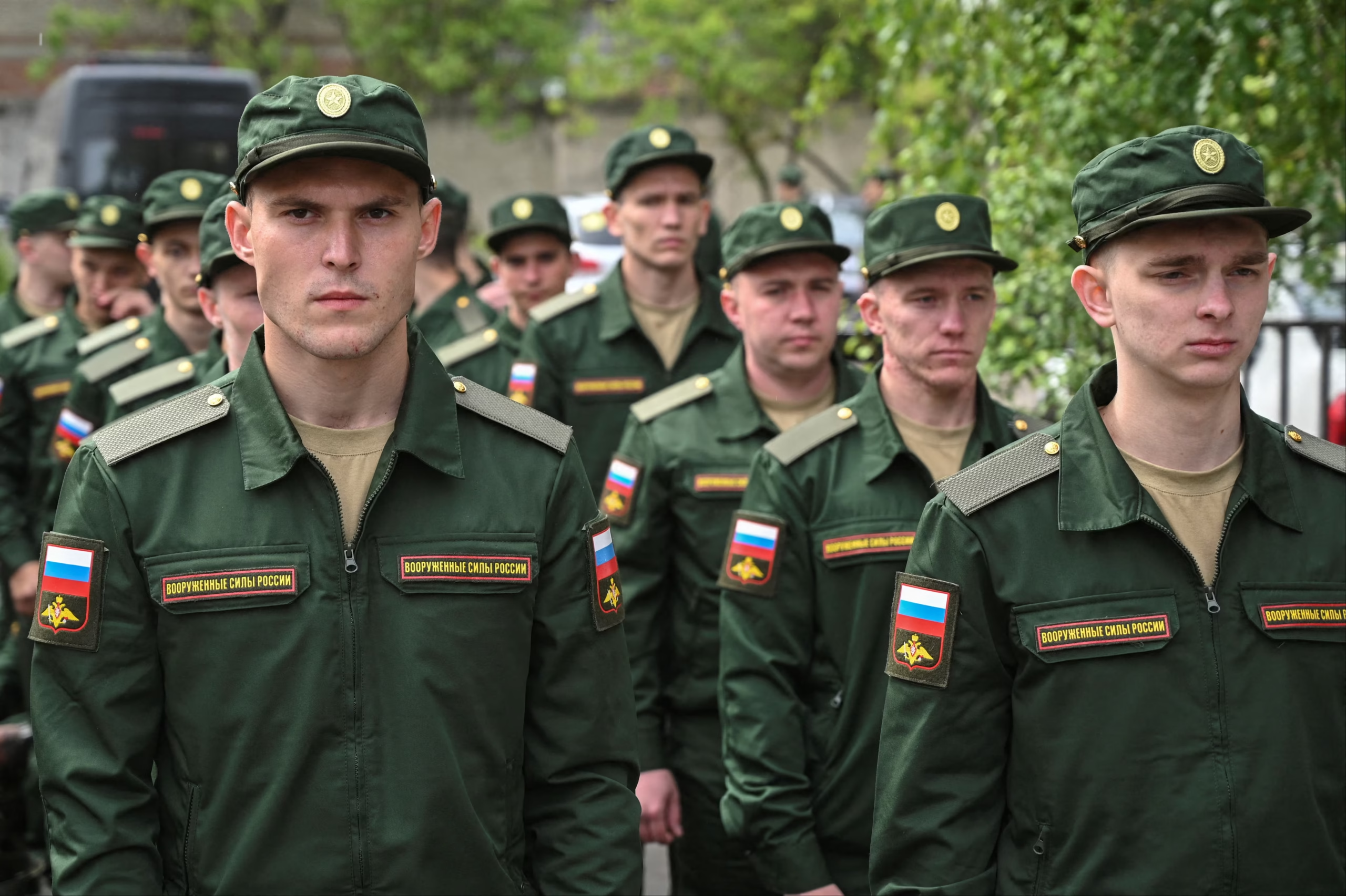
Reports from several conflict zones show that military forces sometimes use civilian structures (homes, schools, hospitals) for logistics, shelter, or tactical advantage. That does not automatically mean every claim is true — each case needs independent verification.
How to investigate — a safe checklist
- Compare satellite imagery: Use public tools (e.g., Google Earth historical imagery) or commercial imagery where accessible. Look for new vehicle tracks, barriers, or tents that weren’t there previously.
- Check reliable local media and NGO reports: Search for multiple independent confirmations (local newspapers, reputable NGOs, international monitors).
- Verify social posts with OSINT techniques: Geolocate photos (landmarks, signage), check timestamps, and cross reference with maps.
- Seek statements from credible authorities: Sometimes UN bodies, OSCE-type monitors, or humanitarian groups publish reports documenting misuse of civilian sites.
- Be cautious with eyewitness accounts: They are valuable but can be incomplete or biased — treat them as part of a broader evidence set.
What international law says — short overview
International humanitarian law requires parties to distinguish between civilian objects and military objectives. Using civilian properties for military purposes blurs this line and can increase danger to civilians. Deliberate misuse or forced occupation of civilian homes may amount to violations — but legal conclusions usually require careful, documented investigation.
How to talk about it responsibly
- Label claims accurately: use terms like reported, alleged, or verified as appropriate.
- Share only verifiable evidence — avoid amplifying unverified social posts.
- Protect sources: don’t endanger locals who provide information.
Want me to look up evidence for a specific address?
If you’d like, I can help search for satellite imagery, news reports, and verified posts about a specific place — but I won’t share anything that could endanger people on the ground (exact active-location coordinates that might be used by combatants). If you want me to proceed, tell me the town or region (not a private street address) and I’ll search for public reporting and open-source imagery.
Next steps & resources
Resources you can use to verify claims (examples — replace with links to reputable services you prefer):
- Google Earth / Google Maps (historical imagery)
- Commercial satellite providers (Maxar, Planet) — often used by journalists
- Human rights NGOs & monitoring groups (Amnesty, Human Rights Watch, local NGOs)
- OSINT communities and verification tools (e.g., InVID/Thorough)
If you’d like a region-specific check, share the town or region name where your childhood home is located (do not post a precise home address publicly). I can then search public reports, satellite archive snapshots, and verified media so you have better evidence to assess the claim.