

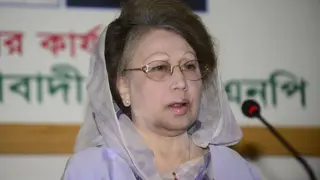
Khaleda Zia: Slain Leader’s Widow Who Became Bangladesh’s First PM
Khaleda Zia is one of the most influential and controversial figures in Bangladesh’s political history.
From personal tragedy to political power, her rise from the widow of assassinated president Ziaur Rahman
to becoming the country’s first female Prime Minister reshaped Bangladesh’s leadership landscape.
Early Life and Personal Tragedy
Born in 1945, Khaleda Zia lived a largely private life until the assassination of her husband,
President Ziaur Rahman, in 1981. His death marked a turning point not only in her personal life
but also in the political direction of Bangladesh.
Entry into Politics
Following Ziaur Rahman’s assassination, Khaleda Zia gradually emerged as a political figure within
the Bangladesh Nationalist Party (BNP), founded by her late husband. Despite having no formal political
background, she gained widespread support and became the party’s chairperson.
Becoming Bangladesh’s First Woman Prime Minister
In 1991, Khaleda Zia made history by becoming Bangladesh’s first woman Prime Minister after leading
the BNP to electoral victory. Her leadership symbolized a major shift in a traditionally male-dominated
political system.
Political Career and Rivalries
Khaleda Zia served multiple terms as Prime Minister, most notably engaging in a long-standing political
rivalry with Sheikh Hasina, leader of the Awami League. This rivalry has dominated Bangladeshi politics
for decades and deeply influenced the country’s governance.
Controversies and Legal Challenges
Her career has not been without controversy. Khaleda Zia has faced corruption charges and legal battles,
which have significantly affected her political role in recent years. Supporters view these cases as
politically motivated, while critics argue they reflect deeper governance issues.
Legacy and Impact
Regardless of political divides, Khaleda Zia’s impact on Bangladesh is undeniable. She broke gender
barriers, shaped modern political discourse, and remains a key figure in the nation’s democratic journey.
As Bangladesh continues to evolve, Khaleda Zia’s story stands as a powerful example of resilience,
leadership, and the complex nature of political power.